Automated particle counting
ASTM D7647 method development, auto-dilution methodology, soft-particle (ghost-particle) interference, the CINRG CS-APC instrument line.

CEO, CINRG Systems Inc. · President, WearCheck Canada
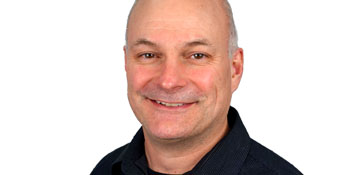
CEO, CINRG Systems Inc. · President, WearCheck Canada
Bill has spent 36 years in commercial oil analysis — from laboratory technician through laboratory manager and now to president and CEO. He is co-founder of CINRG Systems Inc. and President of WearCheck Canada in Toronto, Ontario. He developed the first web-based oil-analysis systems in 1991, and is a frequent speaker at OilDoc, LUBMAT, STLE, and Lube Expo conferences. Bill was profiled in the May 2026 issue of STLE’s TLT magazine in the “20 Minutes With” series.
Bill’s career has been inside the same field he now builds instruments for. After completing pre-med at the University of Waterloo — with minors in biology, chemistry, and computer science — he joined the WearCheck Canada laboratory in Toronto. There he progressed through technician and analyst roles into the laboratory-manager seat, and ultimately to the presidency of WearCheck Canada, the position he holds today. The combination of chemistry and computer-science training produced an early contribution to the industry: in 1991 Bill developed the first web-based oil-analysis systems, more than a decade before web reporting became standard in commercial laboratories.
That lab experience is the foundation for CINRG Systems. The original auto-diluting particle counter (the APC-1) was developed in the WearCheck Canada lab to solve a real production problem — the inability of conventional optical particle counters to deliver repeatable ISO 4406 codes on heavily contaminated, opaque, or water-bearing in-service oils. The APC-1 became the CS-APC-2, then the CS-APC-3 and the benchtop CS-APC-22M, and CINRG Systems Inc. was incorporated to manufacture and market the line. There are now over 80 CINRG auto-diluting particle counters in commercial labs worldwide.
Bill works at the intersection of three communities: commercial oil-analysis labs (as both an operator and supplier), standards-development bodies (active member of STLE’s Oil Monitoring Analyst (OMA) and Oil Monitoring Expert (OMX) certification committees), and conference programs at OilDoc, LUBMAT, STLE, and Lube Expo, where he is a regular presenter. He is widely cited on the practical effects of the NIST SRM 2806 transitions on cleanliness reporting in commercial laboratories, and on the role of soft (“ghost”) particles in inflated ISO codes. STLE’s TLT magazine published a career profile of Bill in its May 2026 “20 Minutes With” series for readers who want a deeper personal background.
ASTM D7647 method development, auto-dilution methodology, soft-particle (ghost-particle) interference, the CINRG CS-APC instrument line.
NIST SRM 2806 family transitions, µm(b)/µm(c) reporting, interlaboratory studies for primary calibration fluids, CINSTAN secondary standards.
Throughput, repeatability, ISO/IEC 17025 method validation, LIMS integration, lab management at WearCheck Canada.
First web-based oil-analysis system (1991), web APIs, BI dashboards, business-intelligence reporting, AI in lubrication condition monitoring.
Test-method selection, sample-handling workflows, condition-based maintenance integration, cost/benefit analysis for end users.
Oil-sensor technology, electrification of fleet, the future of commercial oil-analysis labs in a sensor-and-EV era.
Conference papers, technical articles, and industry features authored or co-authored by Bill.
For inquiries on automated particle counting, robotic viscometry, ISO 11171 calibration, or oil-analysis program design.
Tell us about your throughput, your test methods, and your facility. A CINRG engineer will help you scope the right configuration — and put you in touch with your nearest dealer.